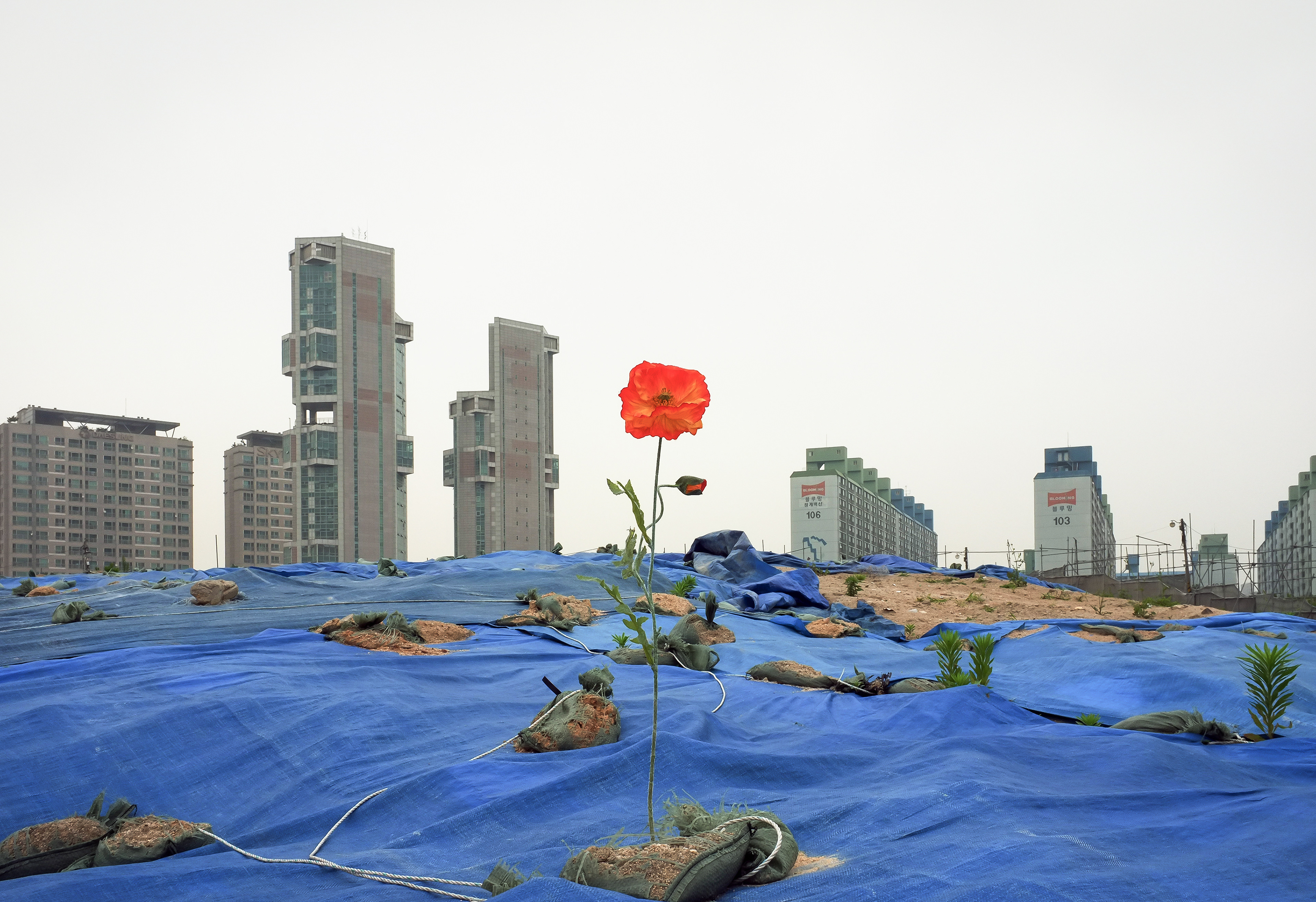
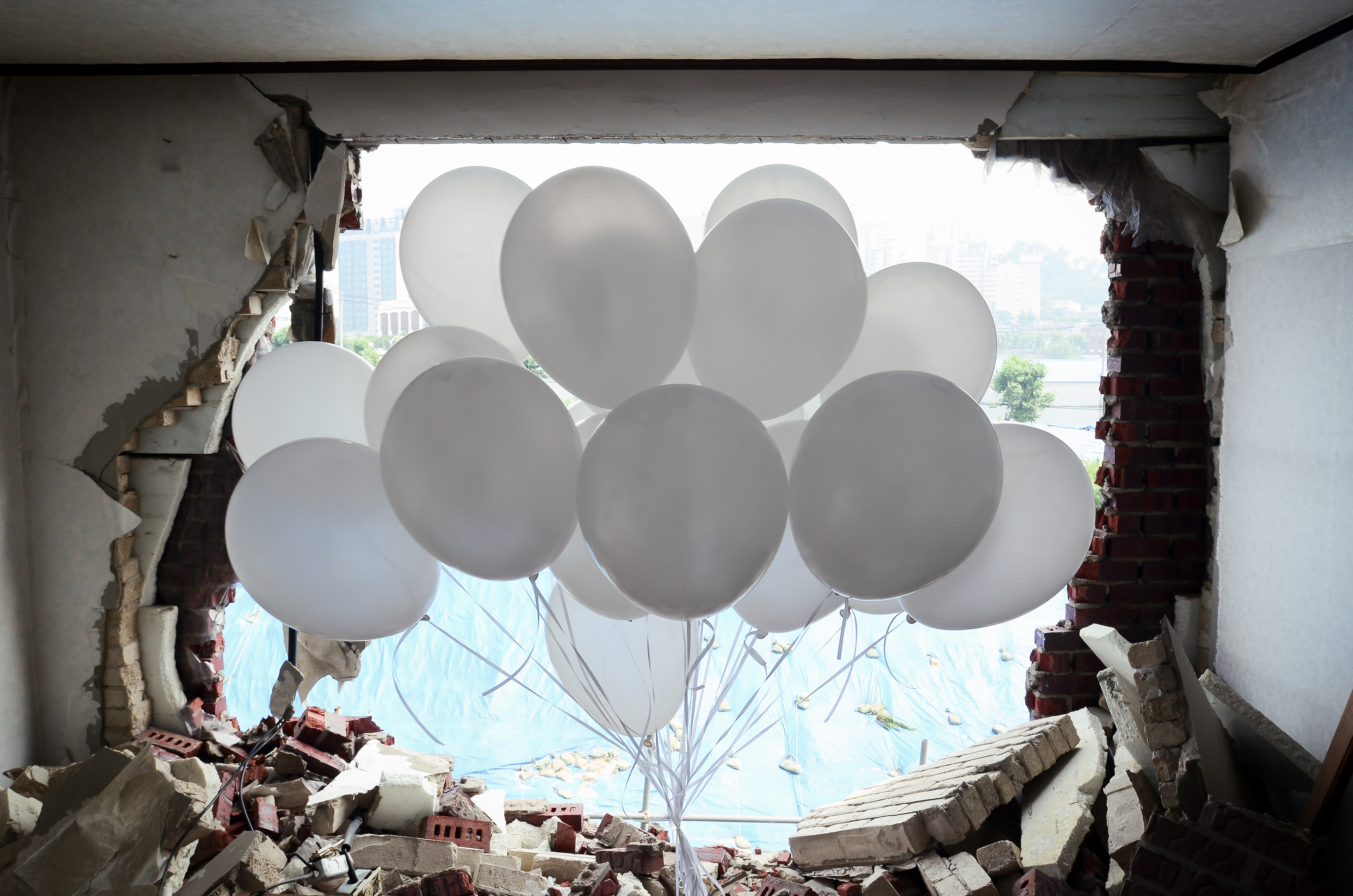
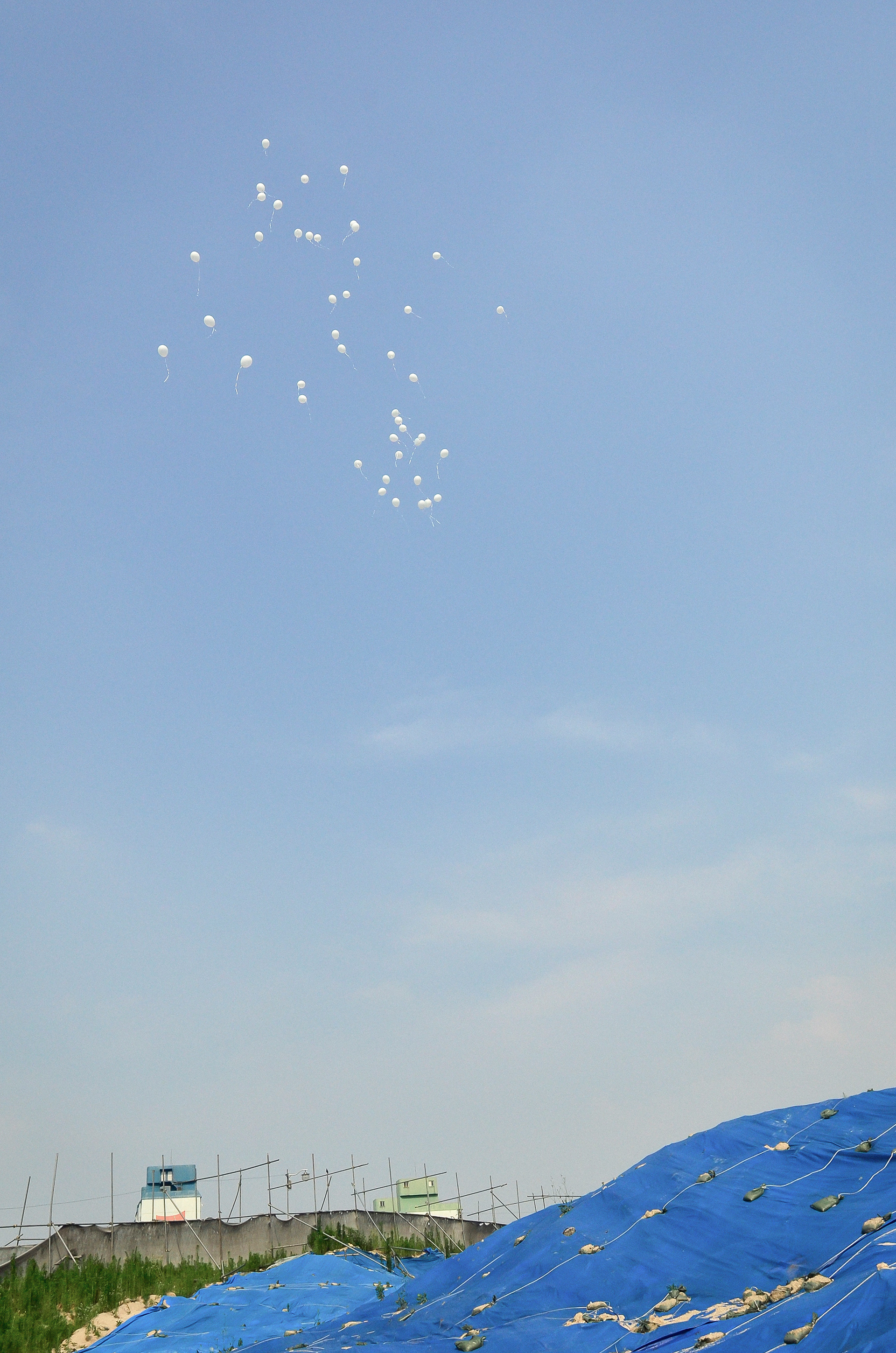
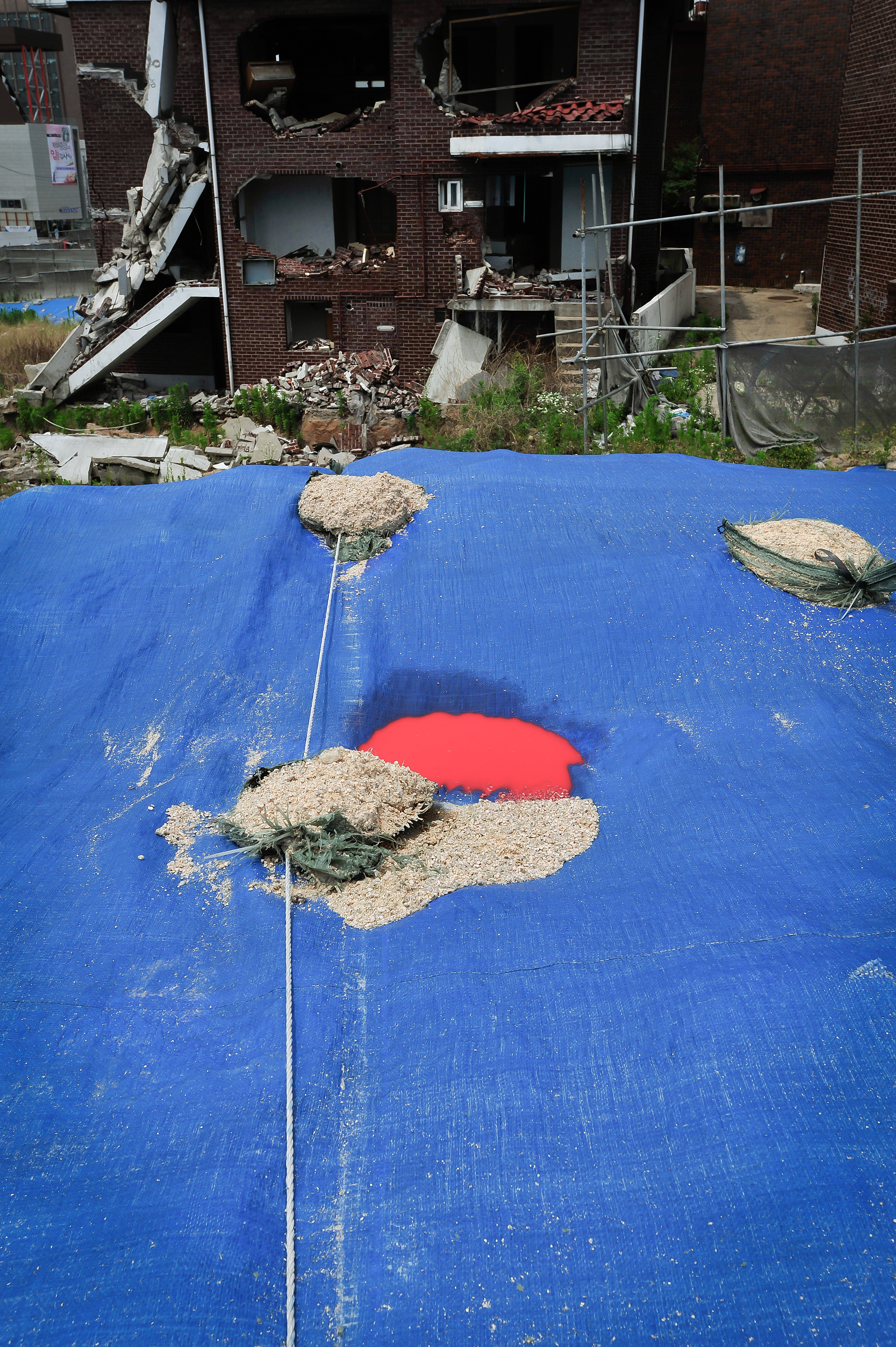
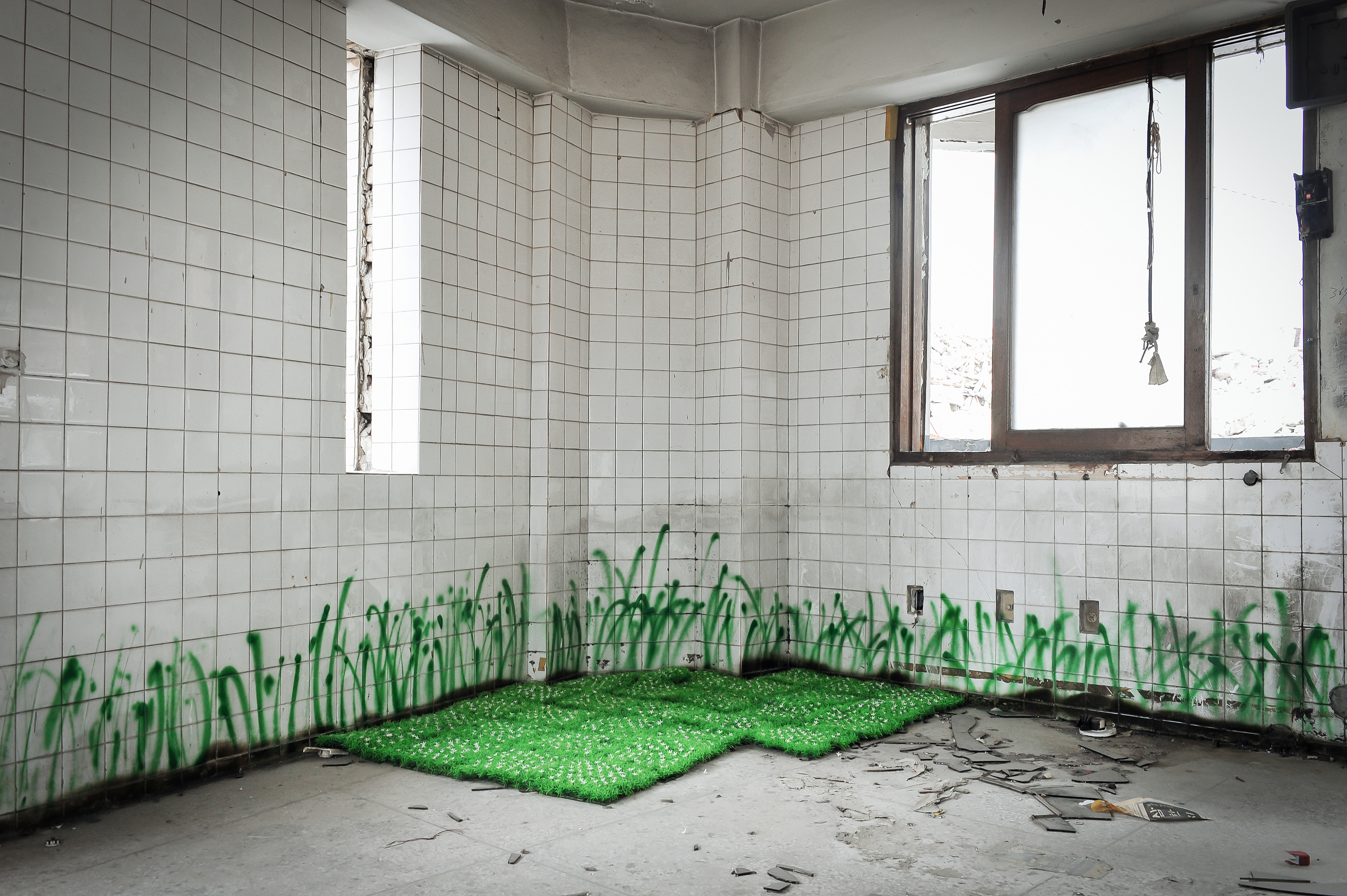
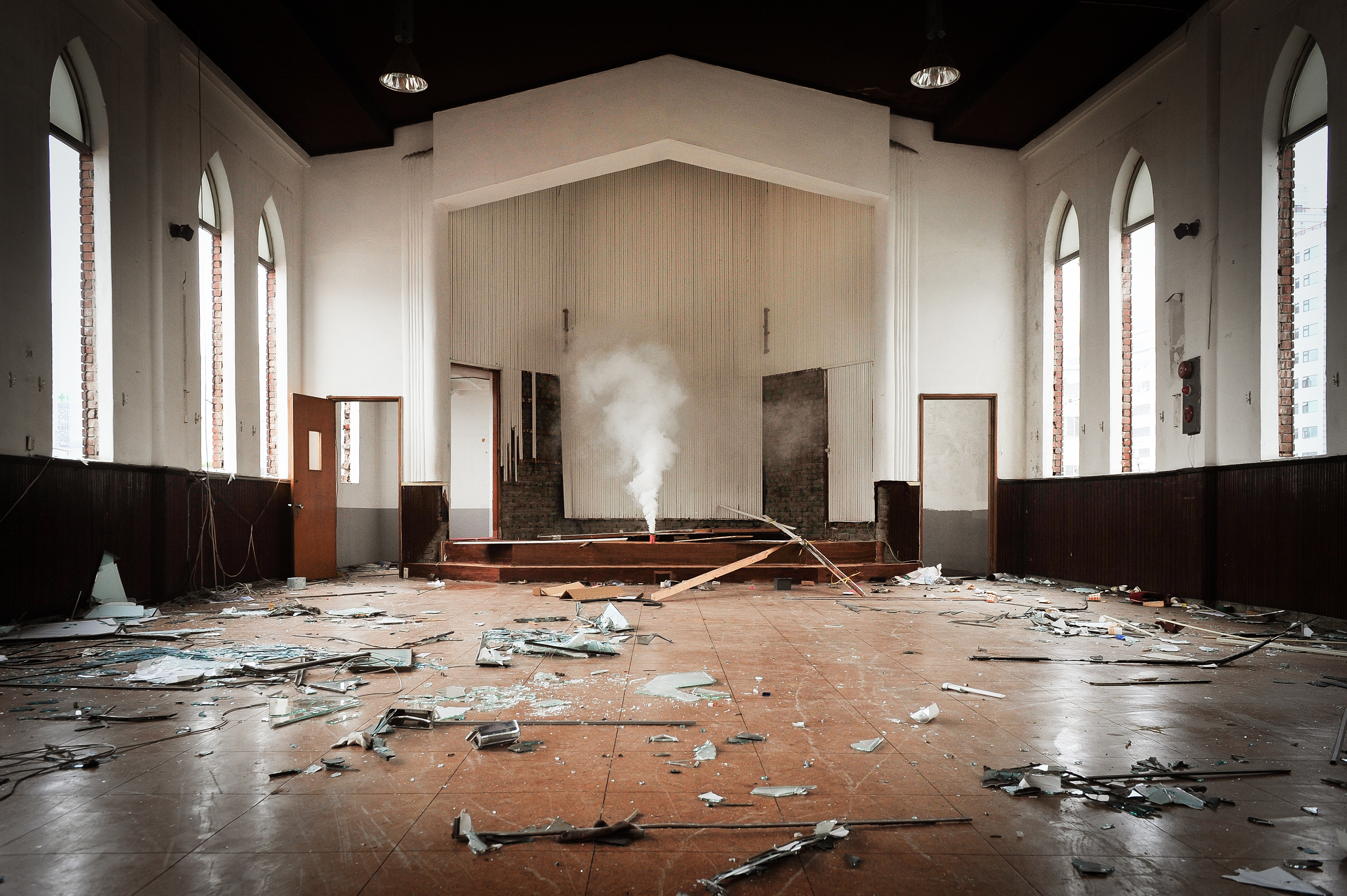
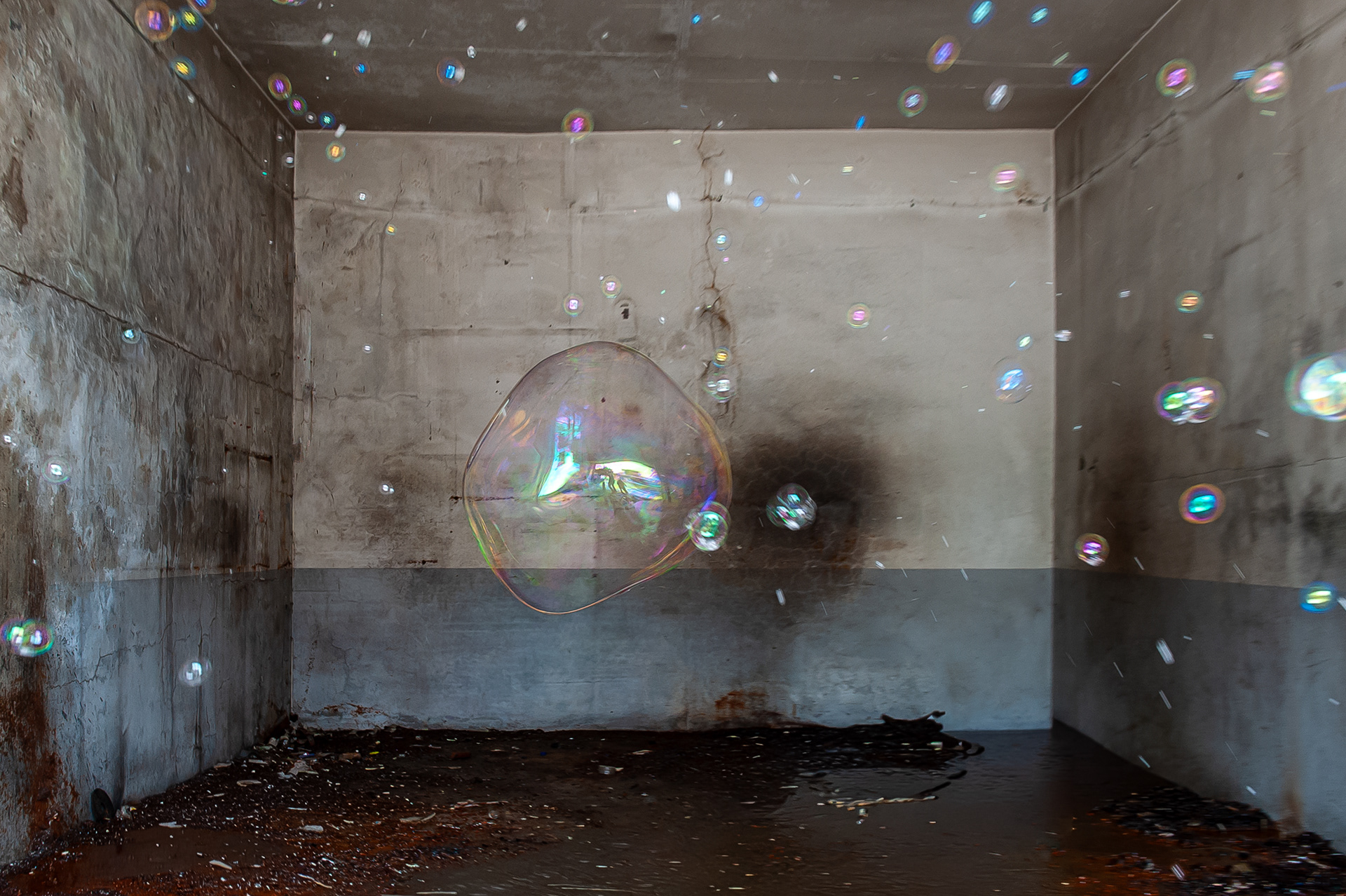
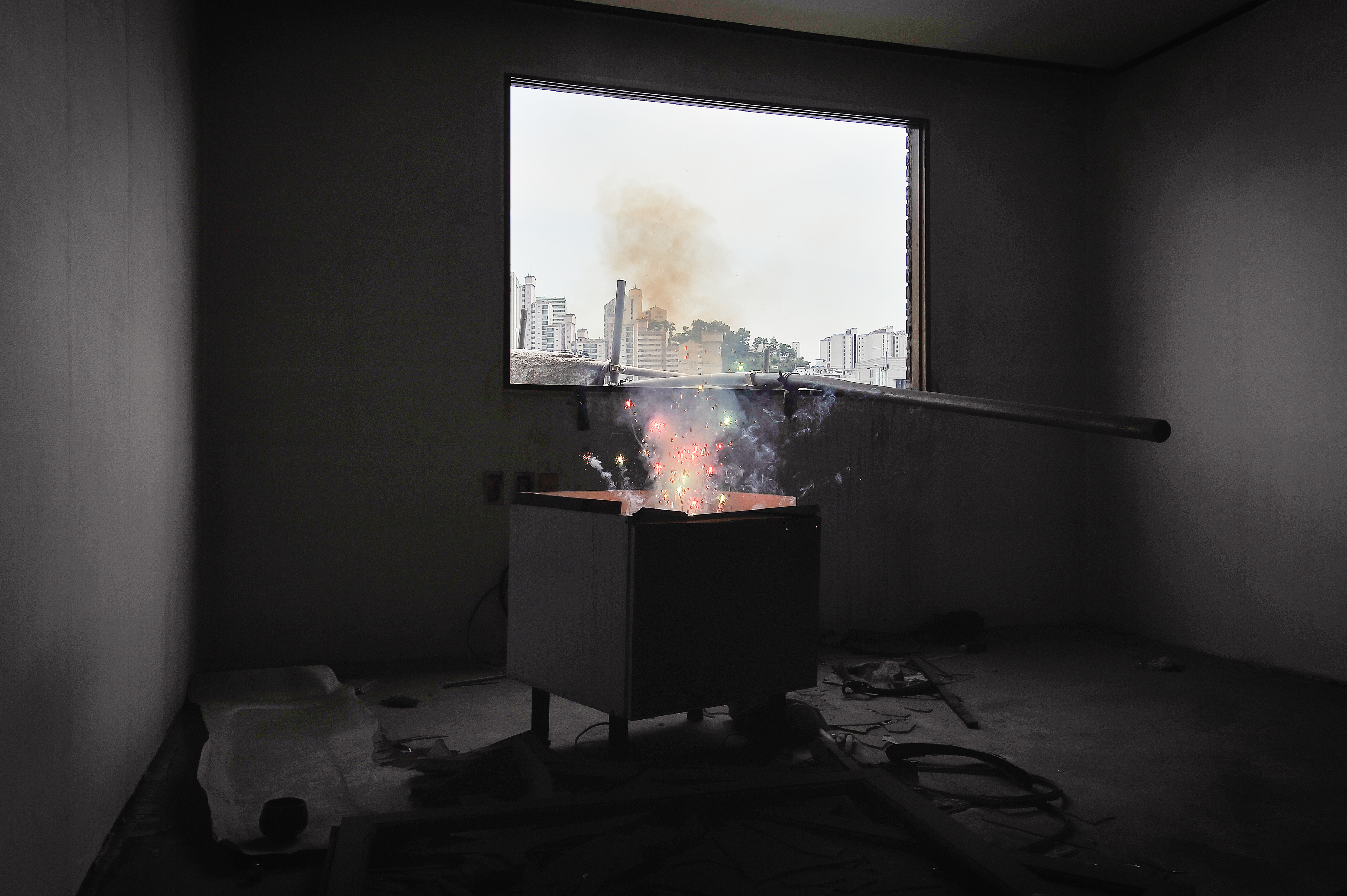
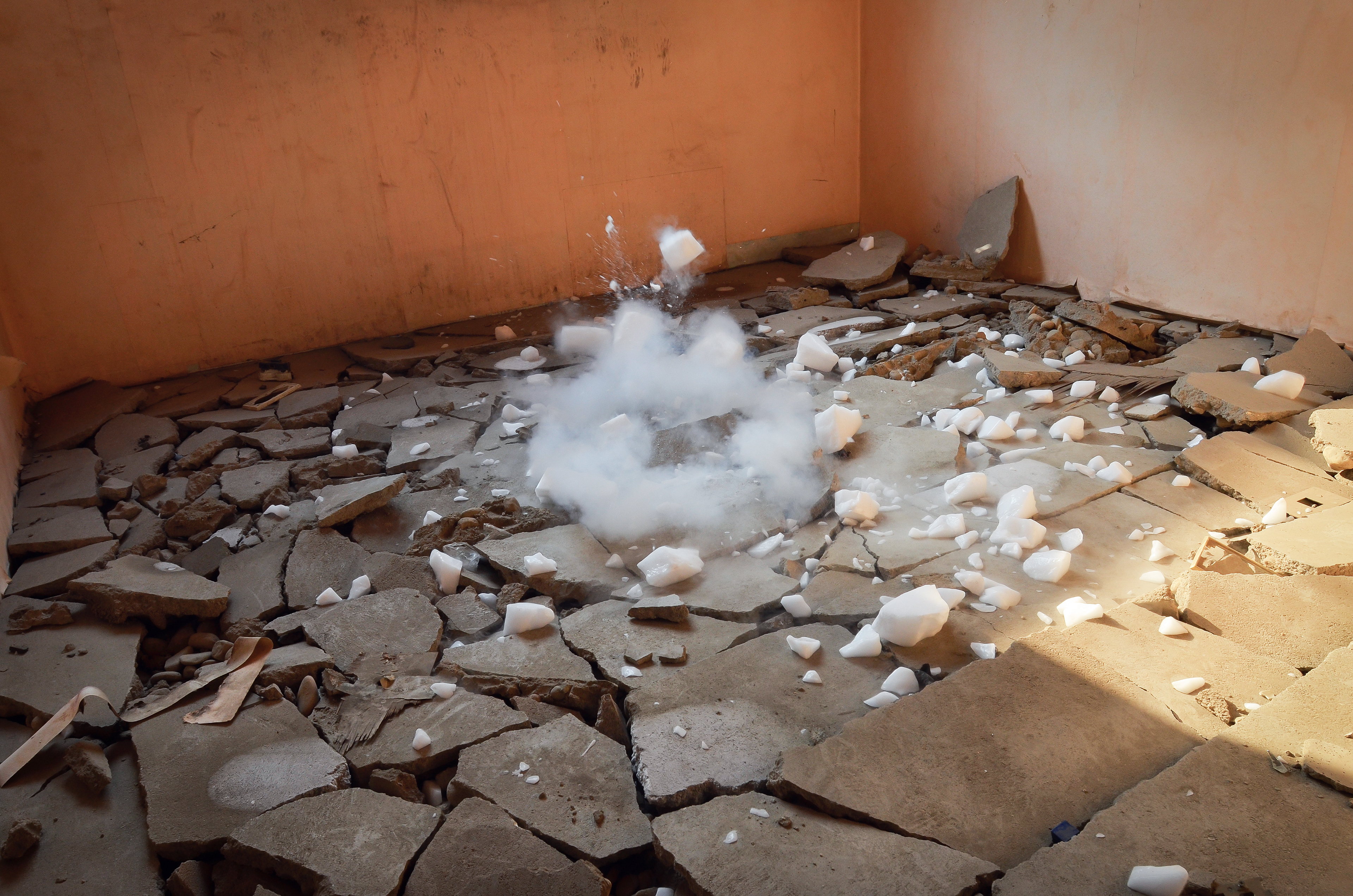
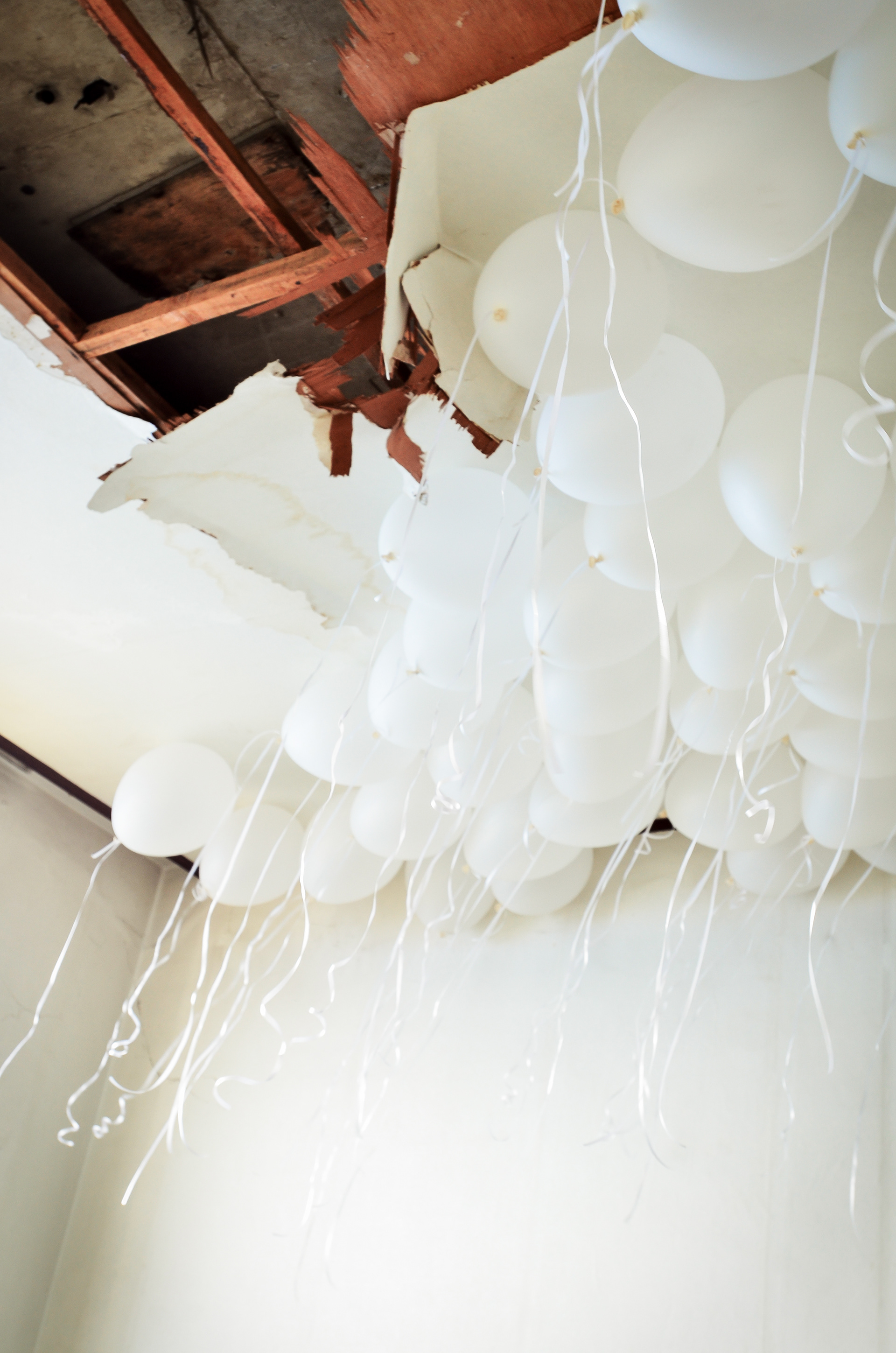
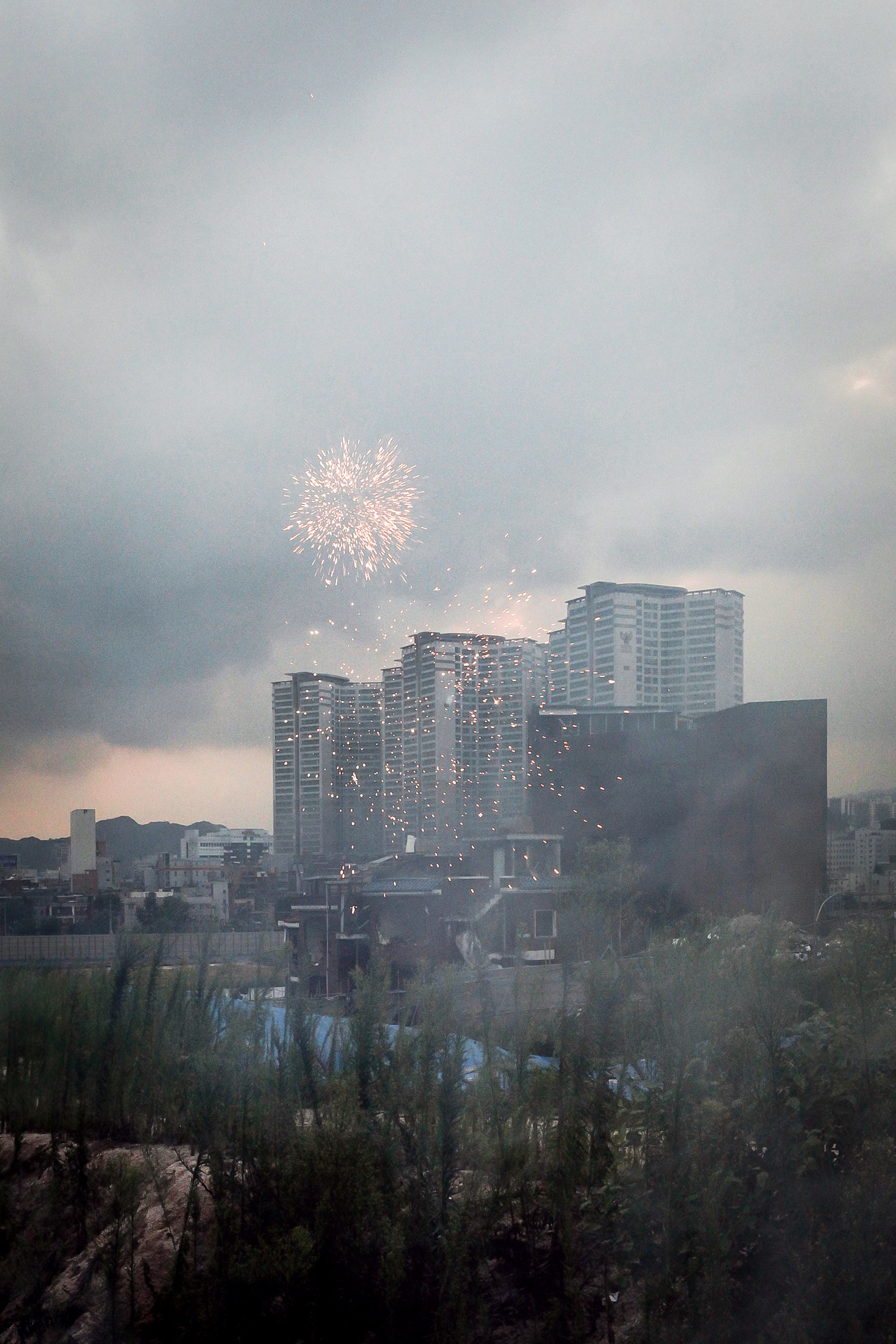
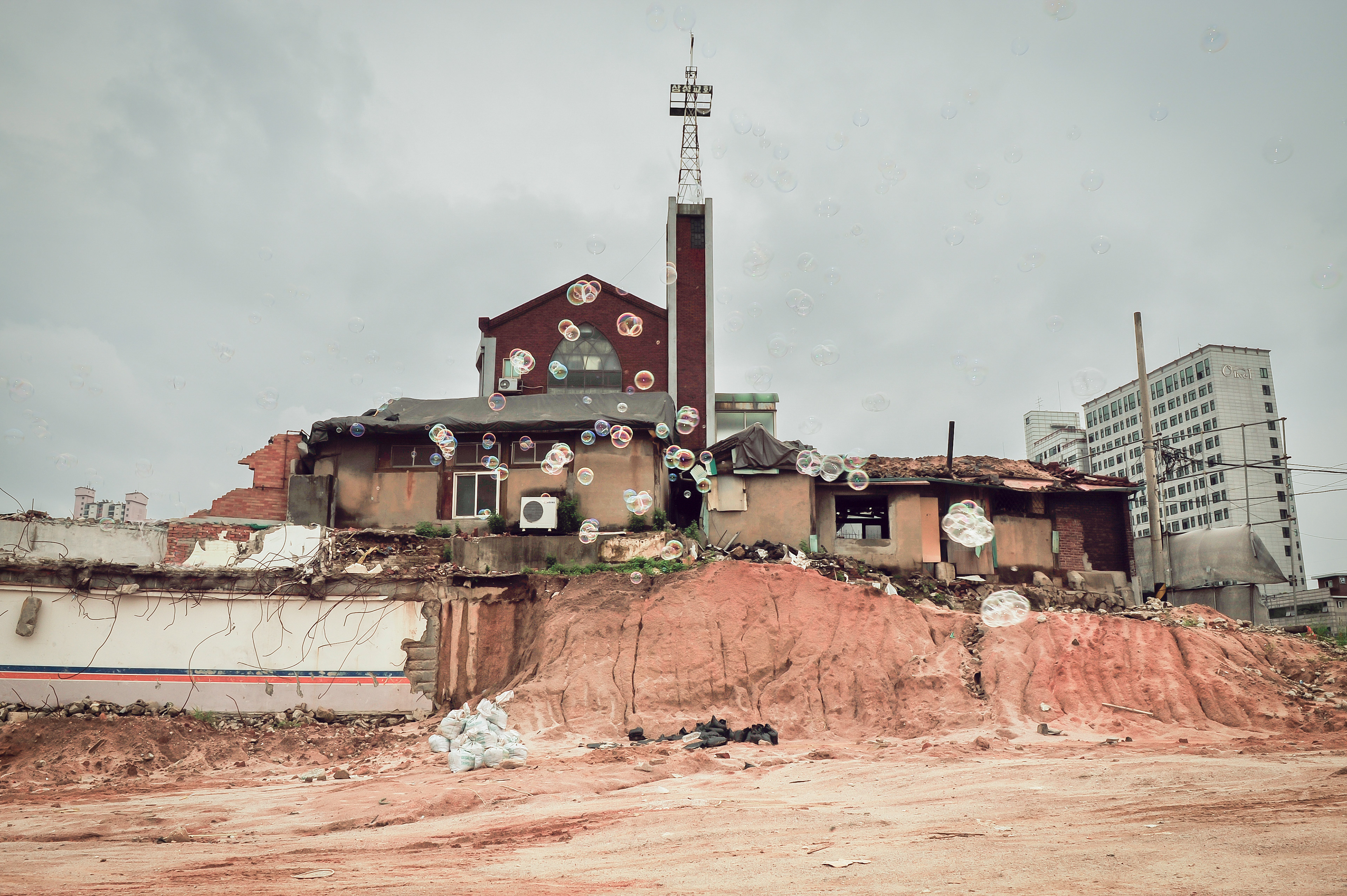
《도시 유희: 왕십리 2011》은 전면 철거를 앞두고 평범한 이들의 삶의 터전이 한순간에 소멸해 가는 재개발 현장의 잔인한 폭력성을 목격하며 시작된 장소 특정적 연출 사진 연작입니다. 작가는 거대 자본의 논리에 의해 한 시대의 역사와 공동체의 기억이 무참히 해체되는 비극적 공간을 단순히 슬픔으로 기록하는 것에 그치지 않고, 그 소멸의 상흔 위에 불꽃, 풍선, 비눗방울 등 찰나적이고 이질적인 오브제를 개입시켰습니다. 폐허가 된 성소와 무너진 가옥 한가운데서 피어오르는 빛과 사물의 움직임은 삭막한 콘크리트 잔해와 극적인 대비를 이루며, 사라져가는 것들의 영혼을 달래고 떠나보내는 일종의 시적 진혼곡이자 정화의 제의(Ritual)로 기능합니다. 디지털 기술로 정밀하게 포착된 이 미학적 개입들은 잔인한 철거 현장을 기억의 보존과 비평적 유희가 교차하는 웅장한 시각적 극장으로 전환시키며, 소멸의 끝에서 피어나는 역설적인 치유와 재생의 메시지를 전합니다.
“Urban Play: Wangsimni 2011” is a series of site-specific staged photographs conceived upon witnessing the ruthless demolition of a historical neighborhood, where private human lives and collective memories were abruptly erased by the logic of rapid urban redevelopment. Rather than merely documenting the tragic structural failure of this displaced space, the artist introduced ephemeral, contrasting objects—such as fireworks, balloons, and soap bubbles—directly into the scarred landscape. Rising from the dust of ruined homes and abandoned sanctuaries, these fleeting interventions weave a sharp juxtaposition against the brutalist concrete debris, functioning as a poetic requiem and a sacred ritual of purification to console the departing spirit of the space. Captured with digital precision, these visual interventions convert a site of violent displacement into a grand, melancholic theater where structural memory and critical play collide, offering a powerful paradox of healing and poetic rebirth at the very edge of complete erasure.